
Food texture is one of things you only notice when it’s not quite right, for example a filling that slips, icing with a not so glossy finish or a dessert that loses its shape when served.
Agar is mainly known for its ability to give firmness to food, but its usefulness goes beyond that. Derived from red seaweed, agar enables food manufacturers to not only give products structure, but depending on the recipe, it can also help create the texture needed for a particular application.
Agar is a multi-purpose ingredient
Agar has applications across bakery, confectionery and dairy products. It can be used in icings and glazes, fruit fillings, jellies and desserts. Whilst on the face of it belonging to the same category of foods, they are quite different products. So, when thinking about using agar in a recipe, you need to think not just about what the agar does, but what you need the recipe and the product to deliver.
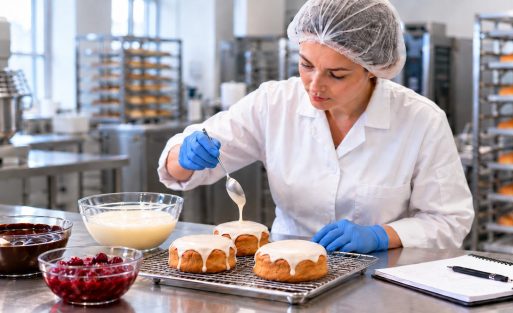
Take an icing and a fruit filling. Both need some structure, yet the finished and eating experience is quite different. An icing may need to spread or coat neatly before it sets. A fruit filling may need to stay in place while still feeling pleasant to eat. Therefore, food manufacturers need to ingredients by starting with the desired finished result, not with a list of possible uses for agar.
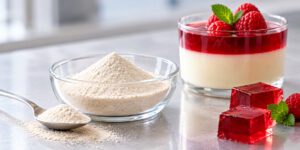
Why might a food manufacturer consider agar?
For an NPD team, agar can be worth exploring when shape, set or stability is part of the brief. Its seaweed origin may also make it relevant to a plant-based development project, although the suitability of any finished product depends on the whole recipe, not one ingredient.
It might be tempting to ask, “Will agar work in this product?” We suggest a better starting question is, “What texture are we trying to achieve?” A product that needs a clean-set calls for a different approach from one that needs to remain soft and easy to spread. Agar does not automatically provide every desirable texture on its own.
That is particularly important when moving between products that appear similar. White and chocolate icings, for example, should be assessed against their own recipes and production conditions rather than assumed to perform identically. Our first blog in this series looks more closely at that icing application.
From idea to finished product
An ingredient can perform well in one trial and disappoint in another if other parts of the recipe or production method change. Agar needs suitable preparation to do its job and its performance in a finished food depends on the formulation around it. In some applications, other stabilisers may also be needed to achieve the desired result.
That does not mean this blog is prescribing a formula. It means development should begin with a clear brief: the texture you want, how the product will be made and how it needs to perform afterwards. Those details help determine whether agar is a good fit and what needs to be tested.
At Andina Ingham, we believe ingredient conversations are most useful when they begin with the application. If you are exploring agar for a new product, or revisiting the texture of an existing one, please get in touch and talk to us about what you are trying to achieve.
https://andina-ingham.co.uk/contact-us/
Further information can be found here:
https://andina-ingham.co.uk/product/agar/
Call our experts now on 01732 453 333 to discuss your requirements, technical specifications, use the contact form.




Add comment